



If you’re still measuring success by how many deals you close, you’re already behind. That was one of the clearest signals from the TSIA Board Summit 2026—an invite-only experience for executive leaders focused on the future of technology services. Across keynotes, panels, and peer discussions, one theme kept surfacing: the way you engage customers today is no longer built for how value is created in the AI era.
What worked in a product-first, seat-based world—driving adoption, tracking usage, and optimizing renewals—is breaking under the weight of AI. Customers aren’t asking whether they’re using your technology. They’re asking whether it’s delivering measurable business outcomes. And most organizations aren’t ready to answer that question.
Key Takeaways
- You’re still getting paid to land deals, not deliver outcomes, and that’s becoming a liability.
- AI is forcing a shift from product usage to measurable business value, and most organizations lack the systems to prove it.
- The companies that win will redesign their customer engagement model around continuous value realization rather than one-time adoption.
What Makes Board Summit Different
The TSIA Board Summit 2026 is designed differently from TSIA’s broader events, and that difference shapes the kind of conversations that happen. While TSIA conferences bring together a wide audience to explore trends, best practices, and emerging ideas, Board Summit is intentionally more focused. It’s built for a smaller group of senior leaders to step away from day-to-day execution and spend time on higher-level questions about where the industry is headed.
That shift in format creates space for deeper conversations around:
- Real operational gaps across organizations.
- Financial pressure and decision-making at the executive level.
- The structural changes required to succeed in the AI era.
The result isn’t just insight—it’s alignment. Leaders leave with a clearer understanding of what’s changing, what’s not working, and where they need to act next.
The Industry Is Misaligned on Value—and It’s Showing
That misalignment came into sharp focus during the closing keynote, where Thomas Lah introduced the DARE framework, TSIA’s perspective on how customer engagement must evolve in the AI era. Rather than starting with theory, the session opened with a simple but revealing set of audience polls designed to take an honest look at where organizations stand today.
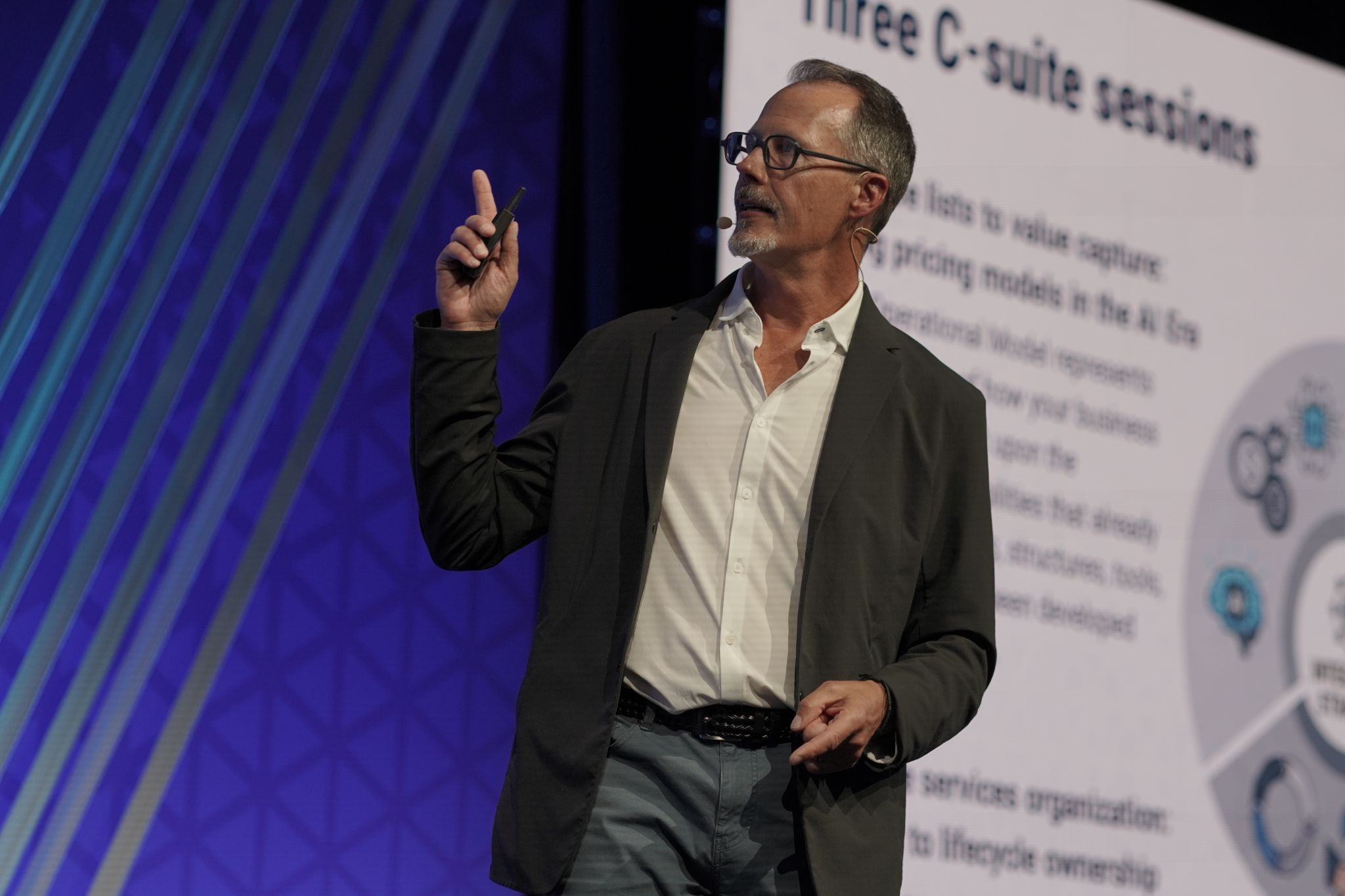
When asked how confident teams are in proving customer value with hard data:
- The majority said they were only somewhat confident.
- Very few reported high confidence.
At the same time:
- Over 40% of organizations still incentivize teams on closing deals.
- Only a small minority tie compensation to the realization of customer outcomes.
That disconnect is the problem. You may be talking about outcomes in your messaging, but your business model still rewards transactions. And customers can feel that. When they ask, “Are we actually getting value from this?”, you don’t just need a narrative. You need proof.
Customer Success Owns Outcomes—but Lacks the System To Deliver Them
Another tension surfaced quickly: accountability vs. capability. Most organizations pointed to customer success as the team responsible for delivering outcomes.
But when you look deeper, the gaps become obvious:
- No consistent access to customer operational data.
- Limited or nonexistent value engineering capabilities.
- Fragmented systems across support, services, and products.
- No closed-loop measurement of value over time.
In fact, when attendees were asked whether they felt confident in their “closed value loop”—tracking, measuring, and proving outcomes—not a single hand went up. That’s not a minor gap. That’s a structural issue. You can’t deliver outcomes consistently if you can’t measure them.
AI Isn’t Simplifying Your World—It’s Making It More Complex
There’s a common assumption that AI will simplify everything. The reality is the opposite.
AI is:
- Expanding the number of possible use cases.
- Increasing the speed of change.
- Requiring constant tuning and optimization.
- Driving rising infrastructure and consumption costs.
These solutions aren’t “set it and forget it.” They require ongoing management, iteration, and refinement. That means your customers need more support, not less. And that’s where many organizations are underestimating what comes next.
From LAER to DARE: A New Customer Engagement Model
To address this shift, TSIA introduced a new framework for customer engagement: DARE (Design, Activate, Realize, Evolve). This model reflects how value is actually created in the AI era.

Design: Define Outcomes Before the Deal
Instead of leading with product capabilities, you start by:
- Defining the customer’s business outcomes.
- Assessing readiness (data, security, workflows).
- Building a clear value hypothesis.
In many cases, pricing discussions don’t even begin until this phase is complete.
Activate: Prove Initial Value
This phase focuses on:
- Delivering early wins.
- Validating the value hypothesis.
- Connecting workflows to outcomes.
It’s not about adoption metrics—it’s about demonstrating impact.
Realize: Drive Measurable Business Outcomes
This is where customers become profitable.
You move beyond initial success and focus on:
- Scaling value.
- Expanding use cases.
- Deepening integration into the business.
In a consumption-based world, this phase determines long-term revenue.
Evolve: Optimize Continuously
AI doesn’t stabilize, and neither should your engagement model.
You’re now responsible for:
- Ongoing optimization.
- Cost management.
- Continuous improvement.
This is where the long-term services value is created.
Related: LAER to DARE Part 1: The Death of SaaS & Birth of Outcomes
The Closed Value Loop Is the Missing Capability
At the center of this model is one critical requirement: You must be able to continuously track and prove value.
That means:
- Measuring outcomes in real time.
- Connecting pre-sale promises to post-sale results.
- Communicating impact back to the customer consistently.
Right now, most organizations can tell a compelling value story during the sales cycle, but can’t defend it after implementation. Closing that loop is no longer optional.
Related: Moving Beyond AI Experiments to Real Business Value
AI Is Changing the Financial Conversation—Fast
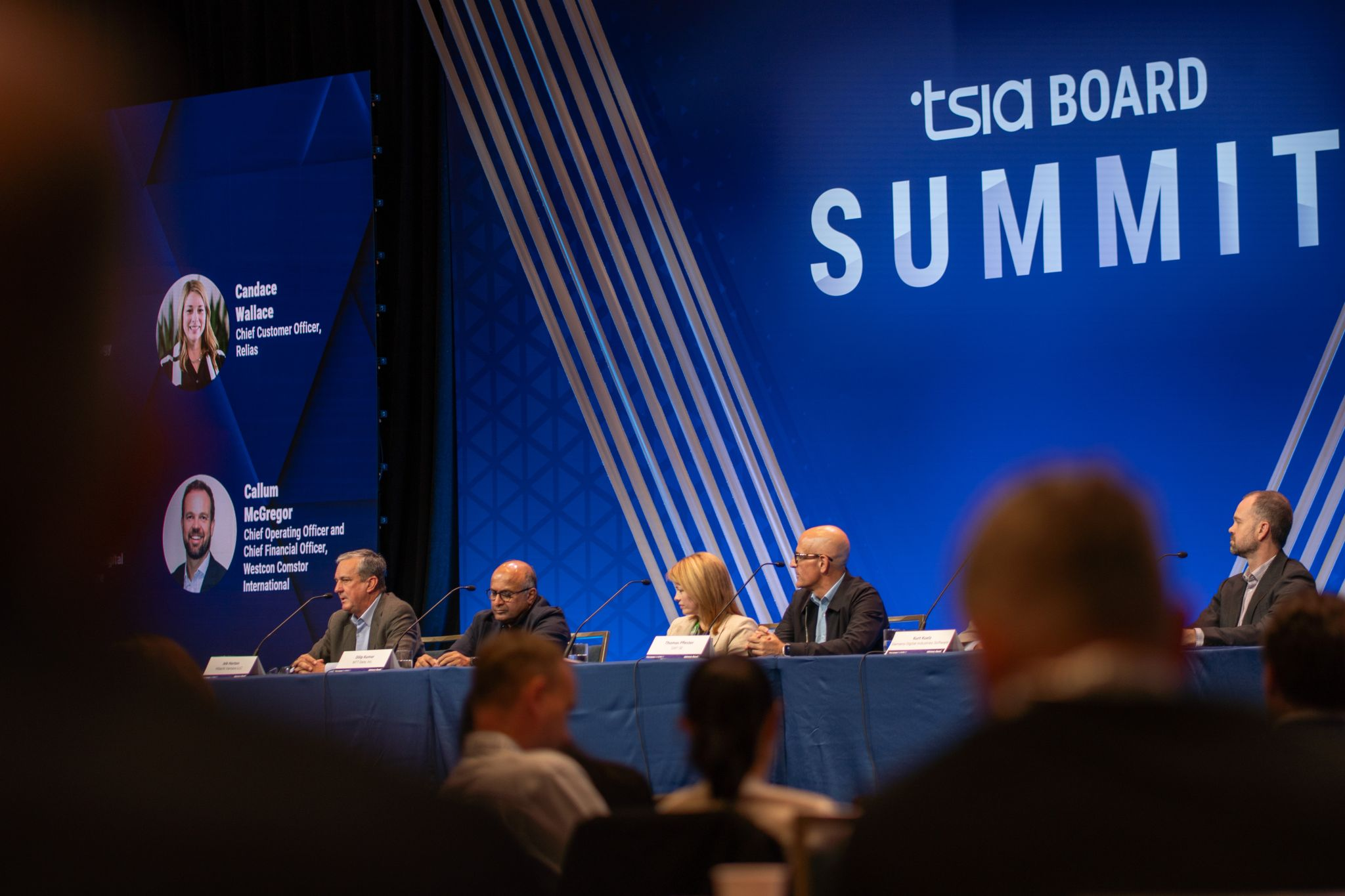
Beyond the engagement model, the executive panel made one thing clear: The financial pressure is intensifying.
Nearly 80% of leaders reported:
- Higher-than-normal cost pressure.
- Increasing scrutiny from CFOs.
- Ongoing expectations for efficiency gains.
At the same time, AI is introducing a new challenge: costs are rising rapidly.
From infrastructure to tokens to data centers, the cost of delivering AI solutions is increasing, forcing organizations to rethink:
- Where AI creates real value.
- Which use cases are worth investing in.
- How to maintain margin.
This is where financial discipline meets strategic decision-making.
Related: The CFO’s Guide to AI Economics™
Services Are Becoming the Engine of Growth—Not Just Delivery
One of the biggest mindset shifts discussed at the Summit is that services are no longer just about implementation.
They are now responsible for:
- Driving adoption.
- Enabling consumption.
- Delivering measurable outcomes.
- Accelerating product revenue.
In some cases, organizations are even:
- Reducing services revenue intentionally.
- Investing services resources earlier in the lifecycle.
- Using services to unlock higher-value product growth.
That’s a fundamental change in how services are positioned.
What Executive Leaders Are Aligning on Right Now
Across sessions, panels, and discussions, a few patterns became clear:
- Value must be measurable—not assumed.
- Customer engagement must be continuous—not transactional.
- Services must be integrated—not siloed.
- Pricing must reflect outcomes—not usage alone.
- AI requires ongoing optimization—not one-time deployment.
These aren’t incremental changes. They require a redesign of your organization’s operations.
What This Means for Your Business
If you’re evaluating where you stand today, ask yourself:
- Are you defining outcomes before or after the deal?
- Can you consistently track and prove value?
- Is your organization structured to deliver outcomes across functions?
- Are you investing in services capabilities that support AI-driven value?
Because here’s the reality: The gap between where the industry is today and where it needs to be is still wide. But it’s closing quickly.
FAQs
What is the DARE model in customer engagement?
DARE stands for Design, Activate, Realize, and Evolve. It’s a customer engagement framework built for the AI era, focused on delivering continuous business value rather than one-time adoption.
Why is customer value harder to prove in the AI era?
AI introduces more complexity, faster change cycles, and evolving use cases. Without systems to track outcomes in real time, it becomes difficult to connect technology usage to business impact.
How is AI changing the role of services?
Services are shifting from implementation support to value delivery. They now play a critical role in driving adoption, optimizing performance, and ensuring customers achieve measurable outcomes.
Smart Tip: Embrace Data-Driven Decision Making
Making smart, informed decisions is more crucial than ever. Leveraging TSIA’s in-depth insights and data-driven frameworks can help you navigate industry shifts confidently. Remember, in a world driven by artificial intelligence and digital transformation, the key to sustained success lies in making strategic decisions informed by reliable data, ensuring your role as a leader in your industry.

.png)


