The rules that built your business are starting to work against you. For years, growth in technology services and SaaS followed a predictable formula. You sold access. You priced by seat. You measured success through adoption. And you expanded from there. But AI is breaking that model.
As automation replaces human interaction, the connection between how you deliver value and how you capture revenue is collapsing. And if you don’t address that gap, your business won’t just slow down—it will shrink. This is the shift to AI Economics™.
To compete, you need to rethink how you price, deliver, and operationalize value across your entire organization. Not incrementally. Structurally.
Key Takeaways
- Seat-based pricing is collapsing as AI reduces the need for human users, creating a dangerous gap between value delivered and revenue captured.
- Most AI initiatives fail to deliver measurable ROI, not because the technology is weak, but because your operating model isn’t built to support it.
- Winning in AI requires a full transformation from pricing and lifecycle (LAER → DARE) to service delivery and outcome ownership.
The End of the Model That Got You Here: Why Seat-Based Pricing No Longer Works
For decades, your revenue model likely depended on one thing: human usage. More users meant more licenses. More licenses meant more growth. But AI changes that dynamic completely. When AI systems take over workflows, executing tasks autonomously instead of through human interfaces, you don’t need more users. In fact, you need fewer.
That creates a dangerous reality:
- Your product becomes more valuable.
- Your customer becomes more efficient.
- Your revenue goes down.
This is what TSIA defines as revenue vaporization. If you’re still pricing based on seats or users, you are financially penalized for delivering better outcomes.
The AI SaaS Trap
Many companies recognize this shift but respond the wrong way. They move from seat-based pricing to consumption models (tokens, API calls, usage-based billing).
But this creates a new problem:
- You are incentivized to increase usage.
- Your customer is incentivized to reduce it.
That misalignment turns your relationship adversarial. Even worse, your customer still carries all the risk if AI underperforms. That’s the AI SaaS Trap: applying old monetization logic to a fundamentally different kind of value.
Why Most AI Initiatives Aren’t Delivering Value
You’re likely investing in AI. Your teams are experimenting. Maybe you’ve launched pilots.
But here’s the reality:
- AI is being used widely across organizations.
- Yet most companies are seeing little to no measurable business impact.
That disconnect is what TSIA calls the Value Gap. Your AI may work technically, but it’s not translating into outcomes your business can measure, prove, or monetize.
The “last mile” problem
The issue isn’t the model. It’s everything around it.
To actually deliver value, AI must integrate into:
- Fragmented systems.
- Poor-quality data environments.
- Legacy workflows.
This last mile is where most AI efforts fail. And if you’re not addressing it directly, you’ll stay stuck in pilot mode without ever scaling impact.
Related: The AI Last Mile: How AptEdge Is Redefining Enterprise Support
AI operational debt is real
Unlike traditional software, AI doesn’t stabilize after deployment. It degrades.
From day one, you’re dealing with:
- Model drift.
- Data changes.
- Bias issues.
- Ongoing computing costs.
This creates what TSIA calls ‘AI Operational Debt.’ If your business model assumes the customer will manage that complexity, you are setting both of you up for failure.
The Competitive Threat You Can’t Outrun
While many incumbents are still optimizing existing models, a new group of companies is operating differently. These AI-first disruptors, what TSIA calls the AI 20, are built around outcome ownership.
They don’t just sell software. They:
- Integrate directly into customer environments.
- Take on delivery responsibility.
- Deliver measurable business results.
And most importantly, they align their revenue with those outcomes.
Related: What the TSIA AI 20 Index Reveals About the Future of Tech
Why this matters to you
These companies are not constrained by legacy economics.
They are designed for:
- Speed over margin (early on).
- Complexity over standardization.
- Outcomes over access.
If you continue operating under a traditional SaaS or services model, you are competing with a structural disadvantage.
Pricing-Led Transformation Starts With One Shift
To close the gap between value and revenue, you need to rethink pricing first. Not last.
This is what TSIA defines as pricing-led transformation:
- Instead of asking: “How do we price this product?”
- You need to ask: “What outcome are we willing to stand behind—and how do we get paid for it?”
The 2-layer revenue model
A modern AI business model has two layers:
1. The baseline (predictable revenue):
- Based on data volume, infrastructure, or platform usage.
- Not tied to human seats.
2. The upside (value-based revenue):
- Tied directly to business outcomes.
- Example: % of cost savings, revenue uplift, or risk reduction.
This structure allows you to:
- Maintain predictable revenue.
- Capture the full value your AI delivers.
Why Your Operating Model Must Change (Not Just Your Pricing)
The traditional lifecycle—Land, Adopt, Expand, Renew (LAER)—was built for a different world and is no longer enough. In AI, adoption doesn’t matter the same way. If your AI is working correctly, users should interact with it less, not more. That’s why TSIA introduces a new lifecycle.
The shift from LAER to DARE
- Design: Define outcomes before the deal is signed.
- Activate: Ensure the AI works in the customer’s real environment.
- Realize: Prove measurable business value, not usage.
- Evolve: Continuously optimize outcomes over time.

This shift moves you from:
- Selling tools → Delivering outcomes.
- Measuring activity → Proving impact.
Related: From LAER to DARE: Why the AI Era Demands a New Customer Engagement Model
The New Service Model You Need To Build
To support this transformation, your services portfolio must evolve. Not incrementally. Fundamentally.
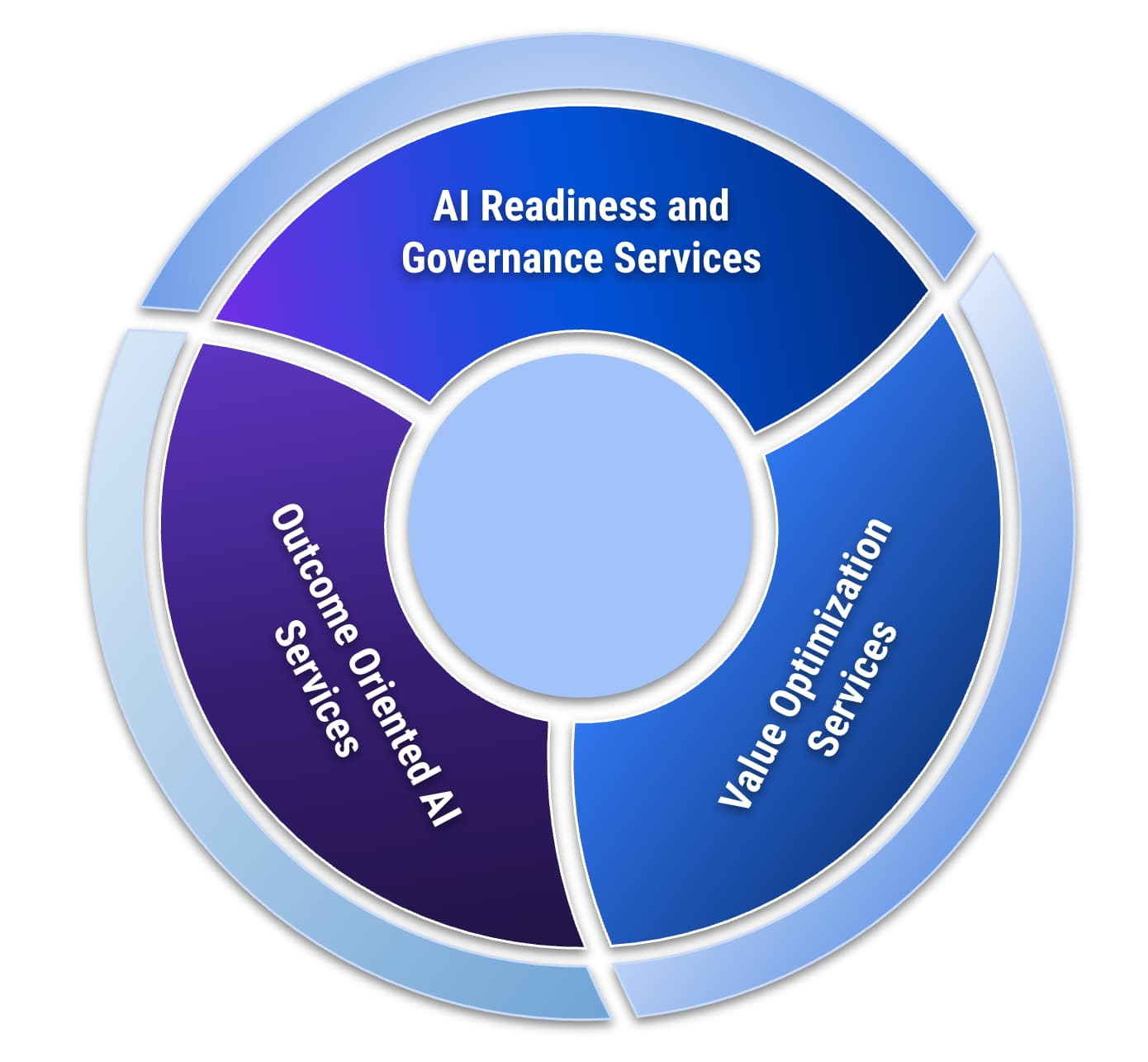
Three service categories that drive AI success
AI Readiness & Governance Services (ARGS)
- Prepare data, systems, and governance.
- Remove barriers to AI adoption.
Value Optimization Services (VOS)
- Manage AI performance over time.
- Address operational debt.
Outcome-Oriented AI Services (OOAS)
- Take ownership of results.
- Align revenue with performance.
If you’re still relying on traditional labor-based services, you’re not positioned to support AI at scale.
What This Means for You
You’re not just adopting new technology. You’re entering a new economic model.
To compete, you need to:
- Rethink how you price.
- Rebuild how you deliver.
- Redefine how you measure success.
Because in AI Economics, the companies that win are the ones that:
- Own outcomes.
- Prove value.
- Align revenue with results.
This isn’t a slow transition. It’s a narrow window. Over the next three to five years, the companies that successfully shift to outcome-based models will redefine the market. The ones that don’t will struggle to justify their value and eventually lose relevance. The question isn’t whether AI will change your business. It’s whether you’ll change your business fast enough.
FAQs
What is AI Economics?
AI Economics is the shift from traditional software and services models, based on access and usage, to models focused on delivering and monetizing measurable business outcomes.
Why is seat-based pricing failing?
As AI automates workflows, fewer human users are needed. This reduces seat counts and disconnects revenue from the actual value your solution delivers.
What is the biggest barrier to AI success?
The biggest barrier isn’t the AI itself; it’s the “last mile” of implementation, including data quality, system integration, and operational readiness.
Smart Tip: Embrace Data-Driven Decision Making
Making smart, informed decisions is more crucial than ever. Leveraging TSIA’s in-depth insights and data-driven frameworks can help you navigate industry shifts confidently. Remember, in a world driven by artificial intelligence and digital transformation, the key to sustained success lies in making strategic decisions informed by reliable data, ensuring your role as a leader in your industry.


.png)