.png)


In 2026, healthcare and industrial tech field services teams are at a breaking point. For years, their job was simple: go on-site, restore service, and leave. However, that's no longer enough. Today's customers want 100% uptime with no excuses. The reality is that equipment is becoming increasingly complex, while the number of expert technicians is declining.
This transformation is especially devastating to medical device manufacturers and industrial companies. When your systems fail, so do your outcomes. In healthcare the situation is worse, as patient care suffers. The previous reactive model is no longer effective, as it does not provide the resilience that modern companies require.
In this blog, we explain why the services team can’t just be a repair crew anymore. What’s required now is becoming a strategic engine that protects uptime, delivers customer outcomes, and is ready to drive growth.
Key Takeaways
- The Model Shift: Don't wait until things go wrong. Stop doing reactive repairs and start doing proactive service to save your margins and retain customers.
- The Talent Gap: The rate at which expert technicians retire exceeds the rate at which new ones can be trained. The largest threat to your service quality is this knowledge drain.
- The Tech Catalyst: AI and telemetry aren’t nice-to-have tools. They reduce expenses and help onboard new technicians quickly.
Why Field Service Must Evolve
For decades, service teams were responsible for restoring functionality when issues arose. That model is too narrow for today's operational expectations. Healthcare facilities and industrial environments depend on continuous system performance, making service delivery a core component of overall product value. Three forces are reshaping the field services function.
Growing System Complexity
Equipment now integrates advanced software, hardware, electronics, diagnostics, and connectivity. This raises the skill threshold and lengthens the time required for new hires to reach independent proficiency.
Remote Capabilities
Remote diagnostics and telemetry allow organizations to assess issues before dispatching a technician. This alters how teams evaluate incidents, assign resources, and manage workloads to meet customer expectations.
Revenue Pressure
Service is no longer viewed as a cost that must be absorbed. Leaders expect field services organizations to support recurring-revenue models and deliver outcomes to guarantee account retention.
Related: The State of Field Services 2026
The Technical Knowledge Gap
The talent shortage is one of the most significant risks to service performance. A large portion of senior technicians are nearing retirement, and their departures will remove decades of practical knowledge. Teams that rely heavily on a small number of experts will face significant operational disruption the moment those individuals leave.
Digital tools can reduce this dependency, but only when technicians are confident in their use. Without structured digital workflows, new employees require more time to reach competency, slowing service capacity and increasing costs.
Changing Customer Expectations
Organizations across healthcare and industrial markets want predictable, efficient service experiences.
They expect:
- Fewer on-site visits.
- Accurate diagnoses before any dispatch.
- Clear updates throughout the process.
These expectations are driving the shift away from manual troubleshooting and toward connected, data-informed service delivery.
Common Barriers Slowing Progress
Several persistent issues prevent service leaders from modernizing their operating model.
Recruiting Constraints
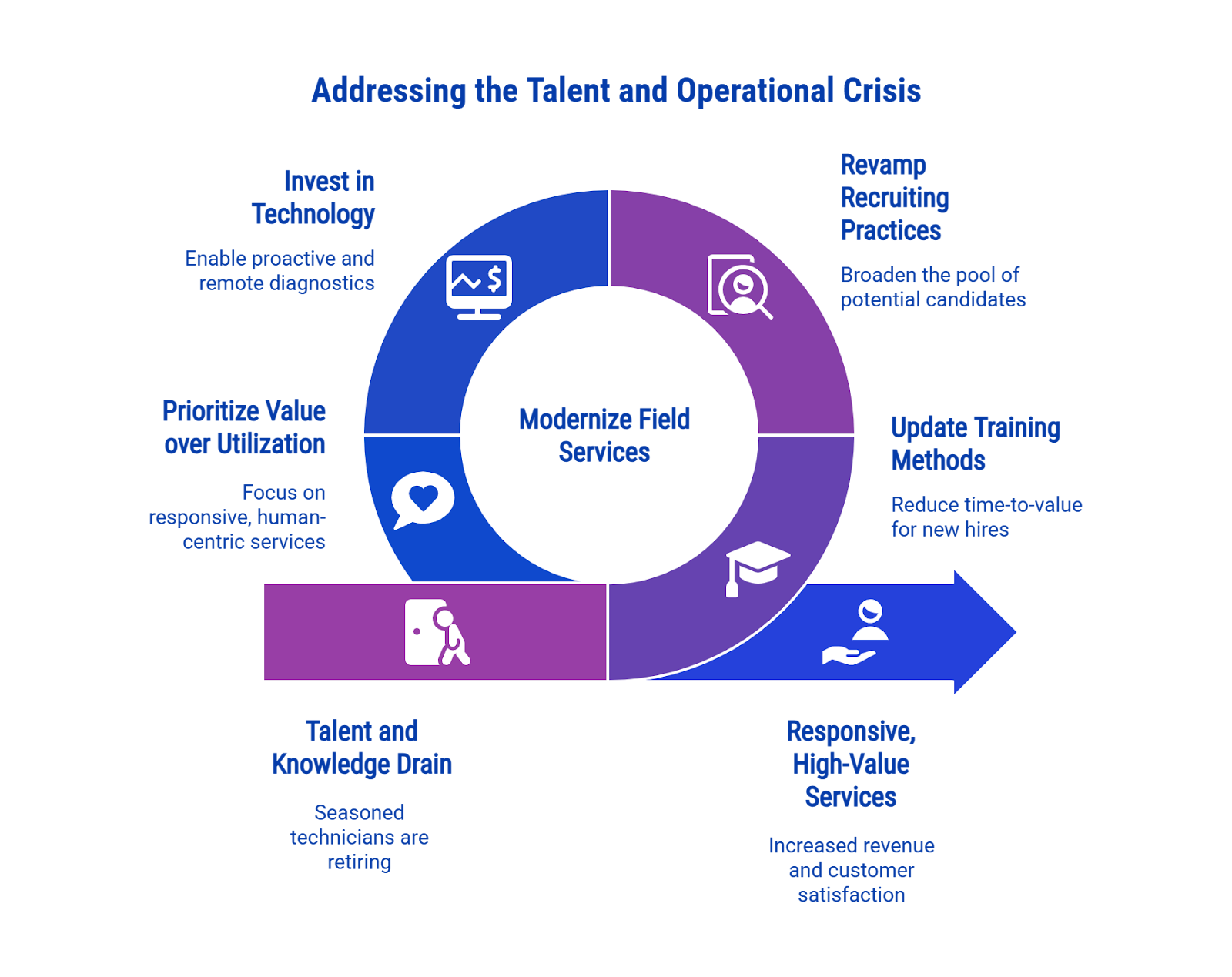
Many firms still apply rigid hiring requirements that restrict entry-level candidates. This narrows the talent pipeline and prolongs vacancy periods.
Slow Onboarding
Training paths that rely on shadowing or extensive in-person instruction extend time-to-value. Without guided digital workflows, new technicians struggle to become productive revenue-generating resources at the pace required.
Limited Operational Insight
Without strong telemetry and workflow data, leaders cannot see where delays occur or where productivity drops. This limits their ability to refine processes.
Misaligned Performance Metrics
Metrics focused on activity volume rather than service quality reduce the time technicians spend addressing customer concerns and identifying new needs.
Missed Revenue Opportunities
Technicians understand customer environments better than any other customer-facing group. Without structured guidance on engagement, organizations lose potential service contract expansions and advanced support agreements.
Related: How Can AI Transform Field Services Onboarding?
Three Foundations of a Modern Field Services Organization
To compete in this environment, leaders must strengthen three structural elements of service delivery.
Workforce Modernization
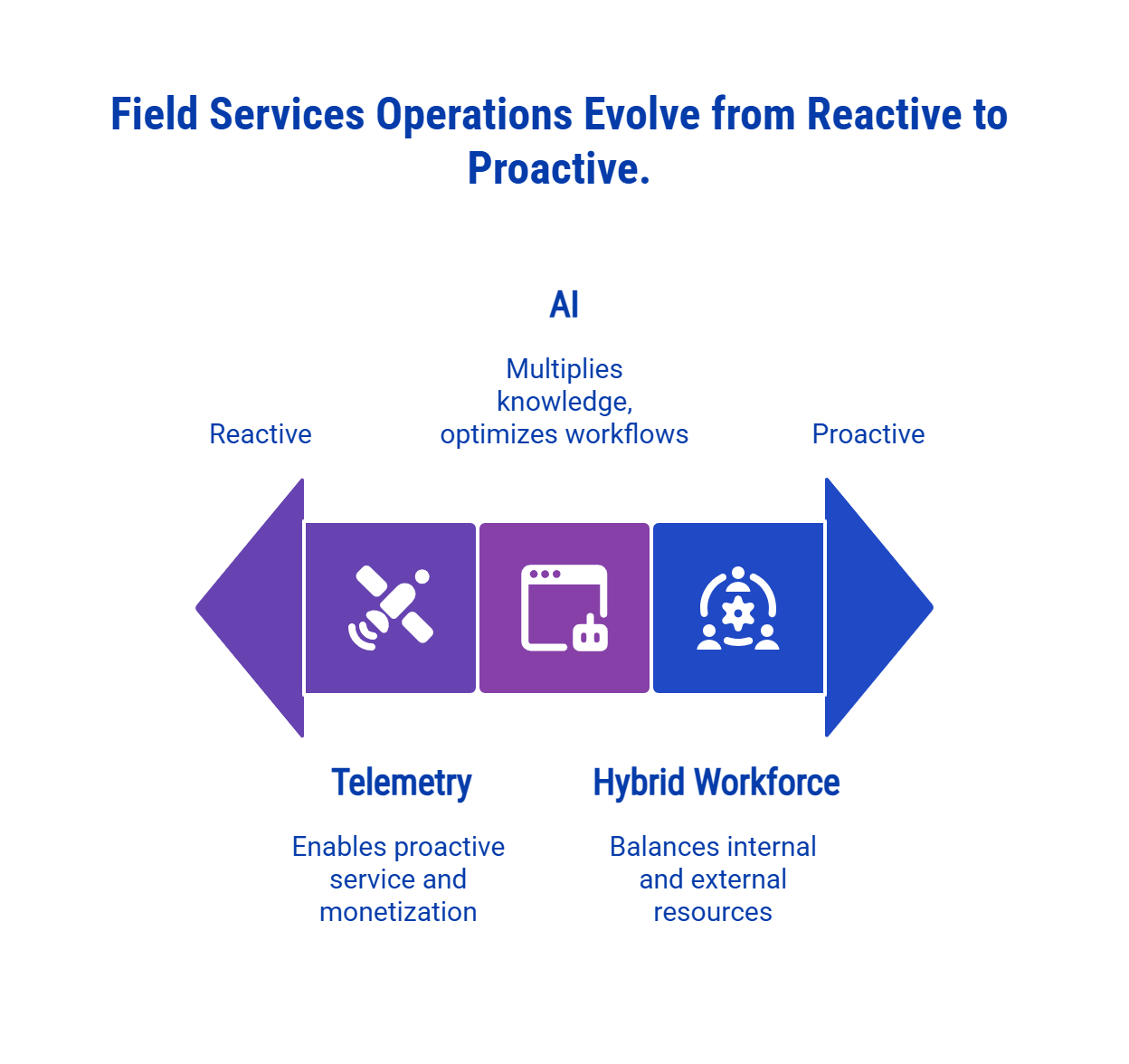
Redefine hiring criteria, integrate AI-assisted learning, and reduce reliance on senior experts for day-to-day troubleshooting. Digital guidance accelerates competency, improves consistency, and increases retention.
Connected Operations
Telemetry provides visibility into system performance and supports accurate, remote assessment. This reduces dispatch frequency, shortens resolution time, and supports proactive interventions that prevent failures.
Revenue Contribution
Field teams interact with customers more often than sales teams. With the right training, technicians can identify unmet needs, translate insights into actionable recommendations, and support the adoption of higher-value service options.
Integrated Impact
These elements reinforce one another:
- Improved training strengthens the use of diagnostic data.
- Better data leads to more informed customer conversations.
- Stronger conversations support retention and revenue growth.
Once aligned, the service organization shifts from a cost center to a strategic contributor.
Related: IBM's Strategic Use of AI to Enhance Field Services Incident Resolution
Where To Begin
Leaders do not need to rebuild their model at once. Three initial steps can create immediate momentum.
Build an AI-Supported Knowledge Base
Digitize expert procedures, guided troubleshooting, and validated repair paths. Give technicians direct access to uniform, reliable information.
Strengthen Connectivity
Move assets onto a connected platform and use telemetry to identify abnormalities early. This informs resource planning and minimizes unnecessary dispatch.
Equip Technicians for Meaningful Engagement
Provide structured prompts for identifying customer concerns and potential service gaps. A brief, well-placed question can reveal requirements for new capabilities long before a sales representative enters the conversation.
Expected Outcomes
Organizations that take these steps gain technicians who reach proficiency sooner, operate more consistently, and support both uptime and revenue. This reduces long-term cost, strengthens customer relationships, and positions field service as a fundamental differentiator.
Related: Accomplishing Field Service Excellence with Trust, Transparency, and Delivery
FAQs
What is the "Outcome-Oriented" service model in simple terms?
It is a shift where customers pay for a result (e.g., 99% machine uptime) rather than paying for a technician to show up and fix a broken part. The provider takes on the risk but gains higher, more predictable margins.
Why do common approaches to the talent crisis fall short?
Most companies try to address the labor shortage by simply recruiting more aggressively or offering higher pay. This fails because the total pool of experienced talent is shrinking; the real solution is to use technology to make less-experienced workers productive faster.
How should leaders approach field service improvement?
Focus on the "Connectivity Mandate." You cannot manage what you cannot see. By prioritizing telemetry and remote data, you gain the visibility needed to move from expensive, reactive, on-site visits to efficient, proactive remote resolutions.
Smart Tip: Embrace Data-Driven Decision Making
Making smart, informed decisions is more crucial than ever. Leveraging TSIA’s in-depth insights and data-driven frameworks can help you navigate industry shifts confidently. Remember, in a world driven by artificial intelligence and digital transformation, the key to sustained success lies in making strategic decisions informed by reliable data, ensuring your role as a leader in your industry.