

How Tech Companies Are Rebuilding the Customer Lifecycle
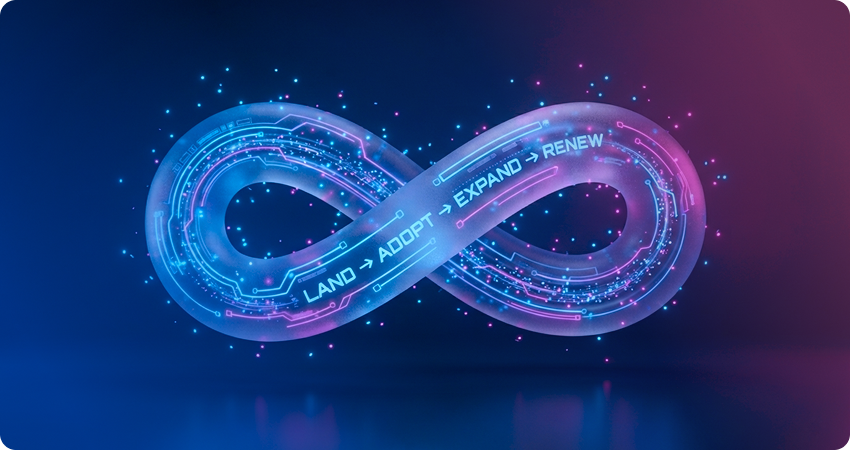
Customer lifecycle management is the process of managing every stage of the customer relationship, from the initial sale through adoption, expansion, and renewal. For over a decade, TSIA’s LAER model (Land, Adopt, Expand, Renew) has provided technology companies with a framework for managing this journey.
AI is disrupting the status quo. Delivering value requires integrating technology into the customer’s environment, instead of simply securing a sale. Consequently, implementation planning, outcome measurement, and technical readiness have to be aligned on before any contracts are signed.
Key Takeaways
- The established framework: Customer lifecycle management in technology companies has traditionally followed TSIA’s Land, Adopt, Expand, Renew (LAER) model.
- Earlier proof of value: AI requires technical integration, making customer readiness and measurable outcomes priorities before and after the sale.
- Redefined stages: Land increasingly involves outcome design, while adoption depends on technical activation, often supported by forward-deployed engineers.
- Connected revenue motions: Expansion and renewal become linked to demonstrated customer value rather than treated as separate milestones.
- A new engagement model: TSIA proposes Design, Activate, Realize, Evolve (DARE) as the framework for managing the AI-driven customer lifecycle.
What Customer Lifecycle Management Has Historically Meant in Technology Companies
Traditional customer lifecycle models typically focus on awareness, acquisition, conversion, retention, and loyalty, reflecting the stages of the marketing funnel. In B2B technology, this relationship extends beyond the initial purchase stage.
For subscription-based providers, much of a customer’s lifetime revenue is dependent on what happens after the initial contract is signed. Successful onboarding, sustained product adoption, and demonstrable business value all influence whether customers renew or expand their investment.
TSIA’s LAER framework reflects these commercial realities via four interconnected stages:
- Land: Acquire customers and establish the initial commercial relationship
- Adopt: Help customers implement and utilise the technology effectively
- Expand: Grow existing accounts through additional products, services, or capacity
- Renew: Retain customers by demonstrating sufficient value to justify continued investment.
These stages also provide a foundation for measuring the customer lifecycle performance.
For providers whose services are becoming increasingly AI-forward, these metrics reveal only part of the picture. The more important consideration is whether customers achieve measurable outcomes that will justify their investment.
AI Breaks the Old Sequence
The traditional customer lifecycle was based around this straightforward LAER progression: land the deal, drive adoption, expand the account, and secure a renewal. AI makes this progression more difficult to sustain because purchasing a solution and realizing its value are two very different things.
Customers nowadays are increasingly looking for evidence of measurable impact from a business before they commit, and AI-native companies can show results in a few weeks. Meanwhile, established technology providers who suddenly find themselves competing with these companies may spend months navigating implementation and integration before customers can see a meaningful return.
This leads to what TSIA’s J.B. Wood refers to as the Promise Gap, which is the difference between business outcomes promised during the sales process, and what the provider demonstrates via delivery.
Three sticking points make this gap especially challenging to close:
- Data and infrastructure: Fragmented data, legacy systems, and integration requirements can prevent AI solutions from delivering reliable results.
- Deployment capabilities: Customers and providers might be lacking the expertise needed to configure, operate, and maintain AI in production environments.
- Commercial clarity: Without a defined use case, measurable success criteria, and a credible business case, even technically successful implementations find it hard to demonstrate value.
These challenges expose a weakness in treating sales, implementation, and ongoing customer management as separate activities. Problems discovered during adoption may have originated in decisions made prior to the contract being signed.
TSIA’s proposed solution is a customer engagement model built for the AI-driven customer lifecycle. DARE (Design, Activate, Realize, Evolve), addresses this disconnect by organizing the lifecycle around achieving strong customer outcomes.
The implication for established technology leaders is significant: improving post-sale execution alone is no longer enough. To effectively compete with AI-native companies, the customer lifecycle needs to be redesigned from the first commercial conversation.
“Land” Now Starts With Outcome Design
The Land stage traditionally focused on winning new customers, with bookings and closed deals serving as the primary measures of success. Implementation readiness was addressed only after the contract was signed.
AI fundamentally changes this cadence . Providers are now able to secure contracts without establishing whether customer data, infrastructure, or operating environments can support the promised outcome. Discovering these limitations after the sale can create delays, additional delivery costs, and potential dissatisfaction.
The most successful providers have responded by bringing technical and commercial planning into the sales process. This includes assessing data quality agreeing on measurable success criteria, and establishing governance responsibilities before deployment. TSIA describes this process of establishing the conditions needed for successful deployment as AI Readiness and Governance Services.
AI also changes the role value engineering plays. Instead of treating the business case as a tool for securing contract signatures, sales and services teams need to establish how they will measure and deliver that value. This reflects Thomas Lah’s argument that value engineering needs to connect commercial commitments with delivery capabilities.
For service leaders, the challenge is determining which readiness activities need to happen pre-sale. While this could mean increasing presales engineering capacity, it may also reduce the risk of committing to outcomes the organization is unable to deliver on.
The metrics change accordingly. Bookings stay commercially important, but a more meaningful indicator of AI readiness is found in the proportion of new deals with an agreed and measurable customer outcome before the contract is signed.
“Adopt” Becomes “Activation”
Traditionally, adoption was measured via product logins, feature usage, and engagement. These metrics revealed whether or not customers were using a solution, but they didn’t necessarily determine whether meaningful results were delivered.
AI raises the stakes here, too. Before customers can enjoy the benefits, solutions need to be configured and integrated into existing systems, and be connected to reliable data. Providing access alone is no longer sufficient.
This is where forward-deployed engineers become essential. Combining technical expertise with consulting and product knowledge, these specialists work directly within customer environments to overcome barriers, and establish functional AI capabilities.
Their role also changes the relationship between product development and service delivery. When engineers encounter integration problems, those findings can inform product improvements as opposed to remaining isolated within individual customer accounts.
For service leaders, the priority shifts from encouraging product usage to removing obstacles that prevent customers from achieving their first meaningful results.
The replacement metric is time-to-first-measurable-outcome: how long it takes from signing the contract to demonstrating business value. This reveals more about deployment effectiveness than login frequency or feature adoption alone.
“Expand and Renew” Merge Into Value Realization
Customer lifecycles historically kept expansion and renewal as separate commercial objectives. Expansion focused on increasing account value via additional products or services, while renewal focused on keeping hold of existing revenue.
AI is bringing these activities closer together. When customers invest in AI to achieve specific business outcomes, their willingness to renew is largely dependent on whether these outcomes materialize.
TSIA’s DARE framework combines these responsibilities within the “Realize” phase, which is focused on demonstrating and sustaining the value customers were promised.
A conventional land and expand strategy often relies on identifying opportunities to sell additional licenses, features, or services. For AI providers, growth can often depend on proving existing deployment has improved productivity, reduced cost, and delivered results.
This creates an opportunity for MSPs. By taking responsibility for infrastructure, data, and AI models supporting a solution, they can maintain greater control over delivery performance. This control also creates the conditions for outcome-based pricing, where commercial agreements reflect measurable results.
However, committing to outcomes needs providers to establish reliable measurement and accountability. Without this, commercial promises can exceed what a lot of delivery teams are realistically able to demonstrate.
As opposed to treating renewal as a standalone negotiation, tech companies should aim to make it a checkpoint within the ongoing value realization process.
This is central to the approach outlined in George Humphrey’s TSW keynote. A Forward Deployed Operations team maintains responsibility after go-live, monitoring performance, addressing delivery issues, and translating operational improvements into demonstrable financial impact.
For Customer Success and service leaders, this merging changes the conversation. Rather than approaching renewal with usage reports and engagement scores, teams can present evidence of the business outcomes achieved and identify where further investment could generate additional value.
Expansion revenue becomes a consequence of proven results, rather than simply another sales target.
The metrics have to evolve accordingly. Renewal and expansion rates are essential, but they need to be evaluated alongside measurable outcomes. This will help providers identify accounts merely using AI from those who find enough value to continue investing.
“Evolve:” The Stage LAER Never Had
When it comes to the traditional customer lifecycle, renewal has often been treated as the final stage before the cycle begins again. In contrast, AI solutions need ongoing attention after deployment and contract renewal.
AI models become less accurate as data transforms, business requirements evolve, and operating costs fluctuate. A solution that delivers measurable value today might become less effective over time without continuous monitoring.
TSIA describes the services needed to address these challenges as Value Optimization Services. This goes beyond simply maintaining the availability of a system. It involves monitoring performance, improving data quality, managing costs, and refining AI capability as customer needs evolve.
Without this ongoing work, organizations might accumulate AI Operational Debt. This is where problems build up when maintenance and optimization are deferred, eventually increasing costs and undermining the value of the original investment.
The need for continuous optimization creates commercial opportunities for technology providers. It can provide recurring services revenue, with customers paying for expertise that helps boost business outcomes.
The “Evolve” stage formalizes this within DARE. Instead of treating renewal as the end of the customer journey, providers continue to ensure AI investment delivers value.
What to Rebuild First
Moving from LAER to DARE does not mean companies need to overhaul their entire customer lifecycle all at once . A more practical approach would be to test the new model within a single product line.
A good place to start is with these three steps:
- Agree on a measurable outcome before making the sale. Choose a single product line and establish customer success metrics that sales, services, and delivery teams are able to agree on. This means cross-functional planning time, and establishing whether commercial promises can be measured.
- Build a small forward-deployed team. Assign technical and customer-facing specialists to new AI deals, focusing on integration and early deployment challenges. This requires dedicated engineering capacity, but will test whether closer technical involvement reduces time-to-first-measurable-outcome.
- Connect one renewal motion to delivered value. Select a group of accounts and assess renewals against documented business outcomes as opposed to usage alone. This needs more rigorous performance reporting but reveals whether demonstrated value supports retention and growth.
These steps give technology leaders practical ways of testing outcome-led customer lifecycle management before they commit to these wider changes.
TSIA’s From LAER to DARE research explores the full framework and the operational changes that are needed to support it.
Benchmark Your Lifecycle Metrics
Read our research on moving from LAER to DARE
Smart Tip: Embrace Data-Driven Decision Making
Making smart, informed decisions is more crucial than ever. Leveraging TSIA’s in-depth insights and data-driven frameworks can help you navigate industry shifts confidently. Remember, in a world driven by artificial intelligence and digital transformation, the key to sustained success lies in making strategic decisions informed by reliable data, ensuring your role as a leader in your industry.